
2nd July 2026
Introduction
Every phone call your business makes or receives tells a story. Who called, when, how long they waited, whether they got through, what happened next. Most businesses collect all of this data automatically through their phone system — and then ignore it completely.
That’s a significant missed opportunity. Call analytics turns raw phone data into actionable insight that can improve customer service, increase sales conversions, reduce costs, and help your team perform at its best.
This guide explains what call analytics is, what it can tell you, and how modern tools — including AI and call control portals — are making it more powerful than ever.
What Is Call Analytics?
Call analytics is the process of collecting, measuring, and interpreting data generated by your phone system. It goes beyond basic call logs to give you a complete picture of how your communications are performing.
Modern business phone systems — whether hosted PBX, VoIP, or unified communications platforms — capture a wide range of metrics automatically. Call analytics software organises this data into dashboards, reports, and alerts that make it easy to spot trends and take action.
What Data Does Call Analytics Capture?
Depending on your phone system, call analytics can track:
Volume and traffic
- Total inbound and outbound calls
- Calls by time of day, day of week, or month
- Peak call periods and quieter windows
Call handling
- Average wait time before answer
- Abandoned calls (where callers hung up before being answered)
- Average handle time (how long calls actually take)
- First call resolution rate (issues resolved without a callback)
Team performance
- Calls answered per agent or department
- Average talk time per agent
- Missed calls by individual or team
- Response time after a missed call
Customer journey
- Which marketing channels are driving inbound calls (with call tracking)
- How callers navigate your IVR menus
- Repeat callers and unresolved queries
How Call Analytics Drives Business Growth
1. Improve Customer Service
Long wait times and missed calls are among the top reasons customers switch to a competitor. Call analytics makes these problems visible before they escalate. If your data shows that 23% of calls between 12pm and 2pm go unanswered, you know to adjust lunch cover. Small adjustments, informed by real data, have a measurable impact on customer satisfaction.
2. Increase Sales Conversions
For businesses that rely on inbound enquiries, every missed call is a missed sale. Call analytics helps you understand how quickly your team responds to new enquiries, how many calls are abandoned, which agents have the highest conversion rates, and what time of day generates the most high-value calls. Armed with this insight, you can restructure your sales process and coach underperforming team members based on evidence rather than guesswork.
3. Optimise Your Marketing Spend
Call tracking — assigning unique phone numbers to different marketing channels — lets you see which campaigns are driving phone enquiries. You’ll know whether your leads are coming from Google Ads, your website, a directory listing, or a leaflet drop. This allows you to cut spend on channels that don’t drive calls and invest more in those that do.
4. Manage Team Performance Fairly
Performance conversations are easier when they’re grounded in data. Call analytics gives you an objective view of each team member’s activity — how many calls they’re handling, how long those calls take, and how often they’re missing calls. This isn’t about surveillance — it’s about giving managers the information they need to support their teams effectively and recognise strong performers.
5. Identify Operational Bottlenecks
If a particular department consistently has high wait times or a low first call resolution rate, that’s a signal. It might indicate under-staffing, inadequate training, or unclear call routing. Without call analytics, these problems often stay hidden until a customer complains. With it, you can get ahead of them.
How AI Is Transforming Call Analytics
Artificial intelligence is taking call analytics to a new level — moving beyond counting calls to understanding what actually happens inside them.
Sentiment Analysis
AI can listen to calls in real time and detect the emotional tone of a conversation — identifying when a customer is frustrated, confused, or about to churn. Managers can be alerted to difficult calls as they happen, not after the fact.
Automatic Call Summaries and Transcription
Instead of agents spending time writing up call notes, AI can automatically transcribe conversations and generate a structured summary — customer name, issue raised, outcome, next steps. These notes can be pushed directly into your CRM, saving time and improving accuracy.
AI-Powered Coaching
By analysing thousands of calls, AI can identify patterns that separate your best-performing agents from the rest — the words they use, how they handle objections, how they open and close. This insight can be used to build coaching programmes based on what actually works, not what managers think works.
Anomaly Detection
AI can spot unusual patterns that human reviewers would miss — a sudden spike in call volume, an increase in call duration for a specific queue, or a drop in resolution rates for a particular product. These early warnings give you time to investigate and act before small issues become big problems.
What a Call Control Portal Gives You
A call control portal brings your call analytics and phone management together in one place — giving supervisors and managers real-time visibility and control without needing to pick up a phone or contact IT.
Live Dashboards and Wallboards
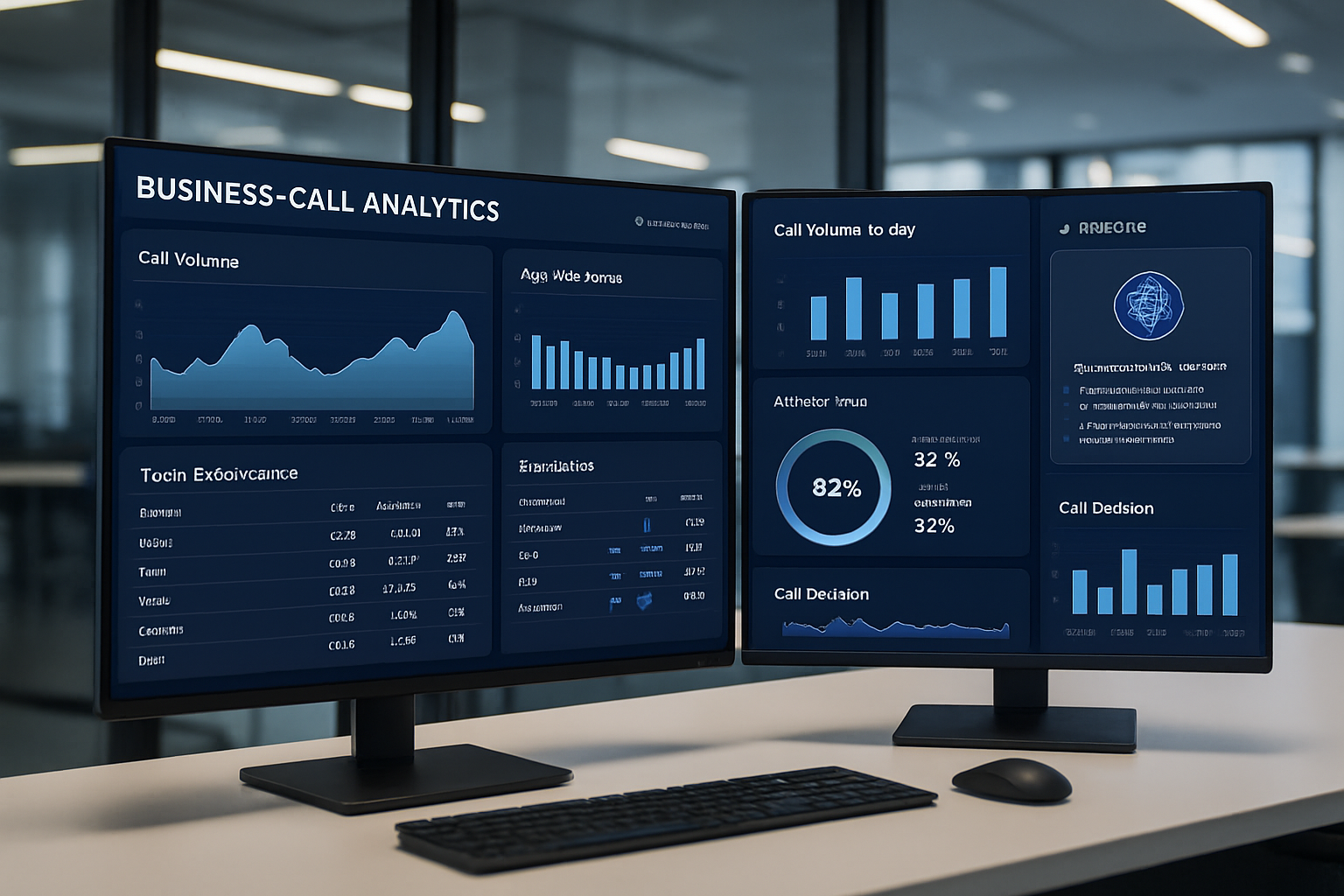
See exactly what’s happening on your phone system right now. How many calls are waiting, who’s on a call, average wait times, and which queues are under pressure. Wallboard displays mean the whole team can see live queue status, creating natural accountability and faster response to spikes.
Call Recording
Record inbound and outbound calls automatically for quality monitoring, compliance, and training purposes. Most platforms let you search, tag, and replay recordings directly from the portal — no digging through files or contacting your provider.
Click-to-Dial and Call Control
Agents can make calls directly from their browser or CRM with a single click. Supervisors can monitor live calls, whisper coaching instructions that only the agent can hear, or barge in when a call needs escalating — all from the portal.
Presence and Availability
See at a glance who is available, on a call, on break, or logged out. This is particularly valuable for distributed or hybrid teams. Presence data also feeds into intelligent call routing — calls can be directed automatically to available agents rather than queuing unnecessarily.
Historical Reporting
Pull detailed reports on any time period — yesterday, last week, last quarter. Filter by agent, team, queue, or call type. Export to CSV or PDF for sharing with senior management. Most portals also support scheduled reports, so the data lands in your inbox automatically each morning.
Getting Started with Call Analytics
Most modern business phone systems include some level of analytics and portal access out of the box. If you’re using a hosted PBX or VoIP system, check what reporting your provider offers — you may already have access to more than you realise.
- Set a baseline — pull your call data for the last 90 days and look at volume, missed calls, and average wait times
- Identify your top three pain points — long wait times, high abandon rate, low conversion — and focus there first
- Review weekly, not monthly — call patterns change fast; a weekly review keeps you close enough to the data to act
- Use the data in team meetings — when people can see their own performance data, accountability improves naturally
- Explore AI features — if your provider offers sentiment analysis or auto-summaries, pilot them with one team before rolling out
Conclusion
Call analytics won’t transform your business overnight. But it will stop you flying blind. And with AI now built into many platforms, the gap between what your phone system collects and what you can actually do with that data has never been smaller.
If you’d like to explore how a modern phone system with built-in analytics, AI features, and a call control portal could work for your business, the team at Just Business Phones is happy to talk it through. Contact us today for a no-obligation consultation.